
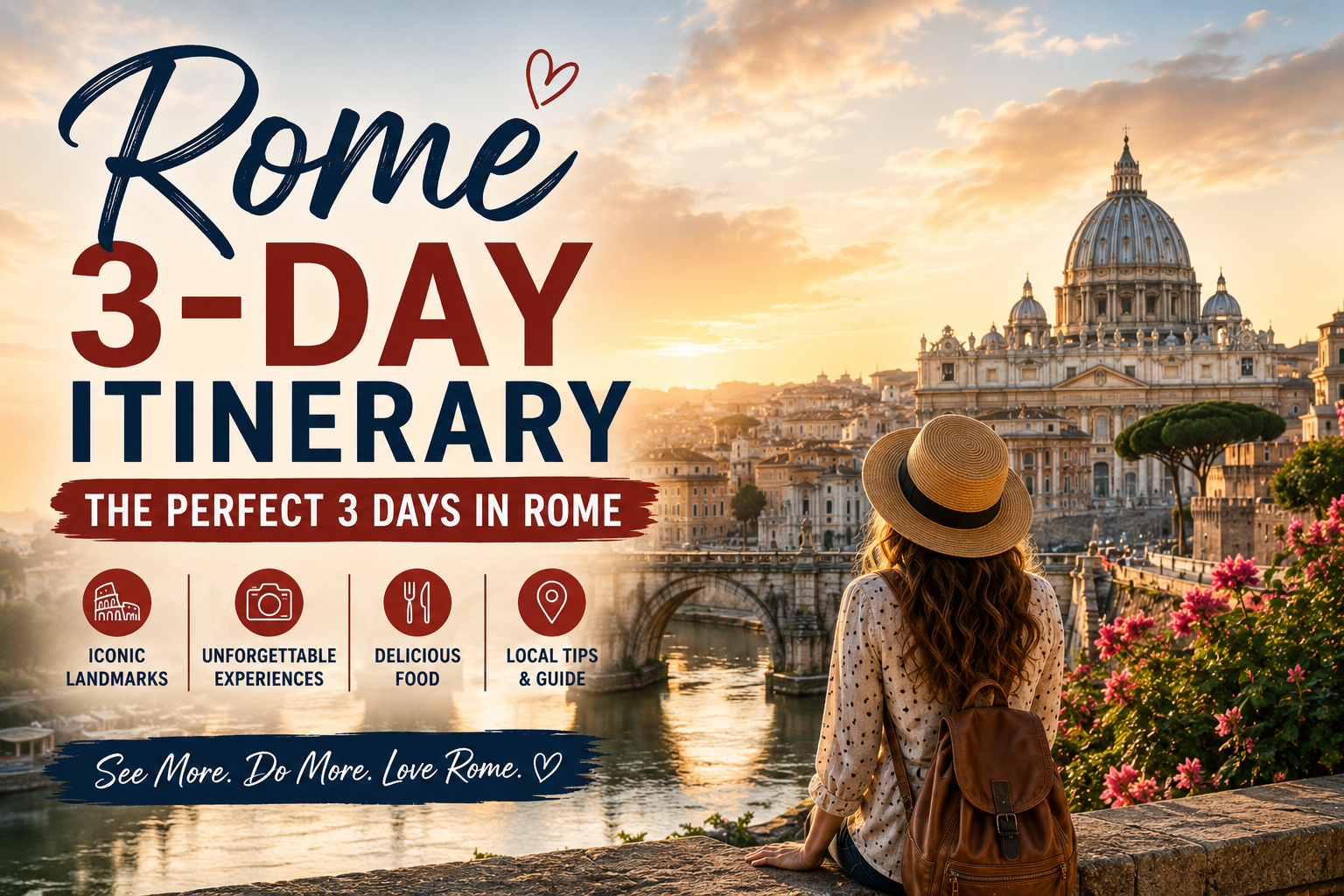
Planning a trip to Italy’s capital and wondering how to spend 3 days in Rome?
Rome is packed with ancient landmarks, world-famous museums, beautiful piazzas, incredible food, and neighborhoods that are worth exploring beyond the major attractions.
With three days, you can experience many of Rome’s highlights without trying to see everything at once.
This Rome 3-day itinerary focuses on the city’s essential attractions while leaving enough time to enjoy Italian food, explore historic streets, and experience Rome at a comfortable pace.
From the Colosseum and Roman Forum to Vatican City, the Trevi Fountain, Pantheon, and Trastevere, here’s how to spend the perfect three days in Rome.
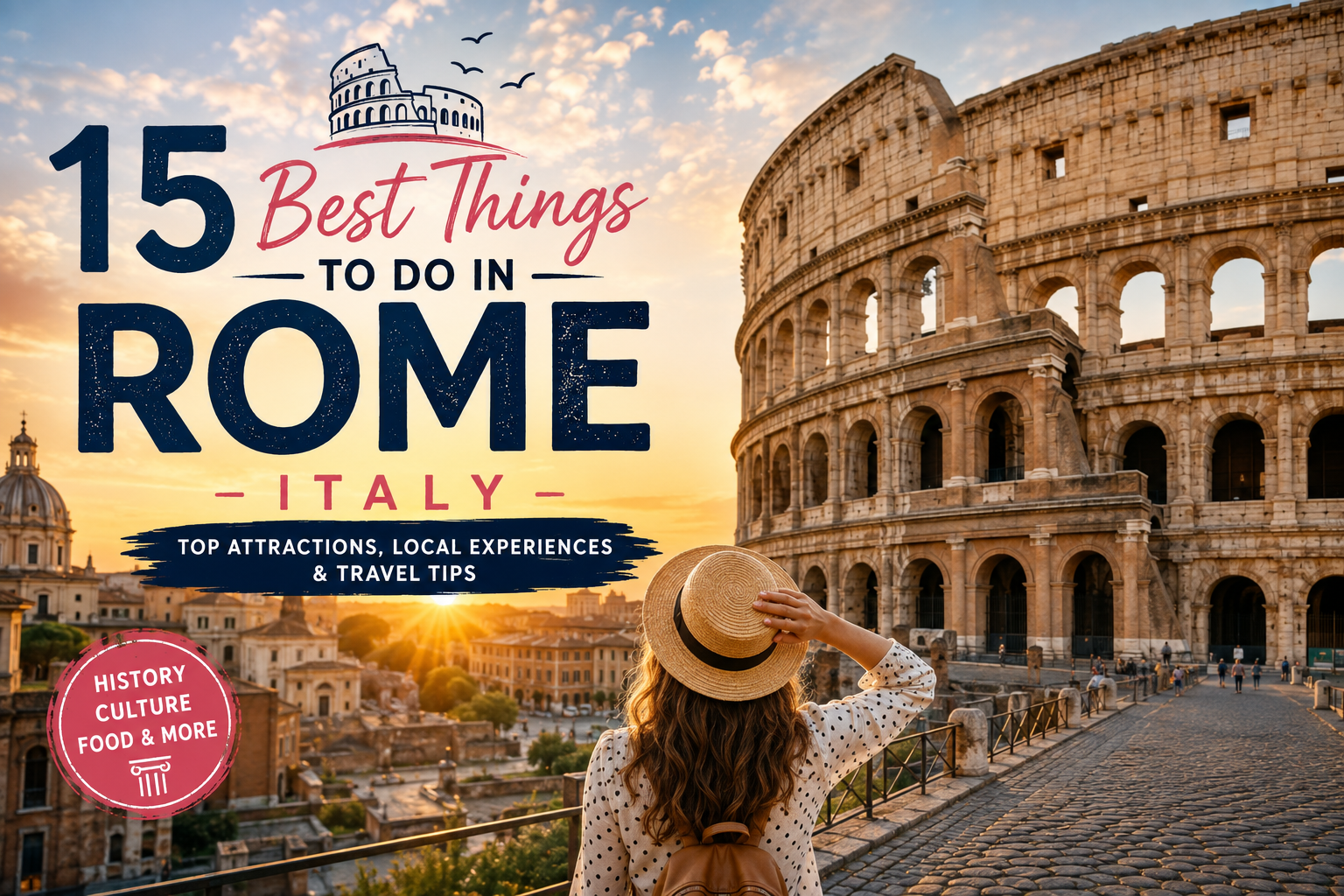
Already looking for more Rome inspiration? Check out our complete guide to 15 Best Things to Do in Rome, Italy →
Rome at a Glance: Your 3-Day Itinerary
Here’s the basic plan:
Day Main Experiences Day 1 Colosseum, Roman Forum, Palatine Hill, Monti Day 2 Vatican City, St. Peter’s Basilica, Castel Sant’Angelo, Piazza Navona, Pantheon Day 3 Trevi Fountain, Spanish Steps, Villa Borghese, Trastevere
This itinerary gives you a combination of ancient Rome, Vatican City, famous landmarks, local neighborhoods, food, and relaxed exploration.
Day 1: Ancient Rome
Your first day is all about discovering the ancient heart of Rome.
Start early and spend the morning exploring some of the city’s most famous archaeological landmarks.
Morning: Visit the Colosseum
Start your Rome itinerary at the Colosseum, one of the city’s most recognizable landmarks.
The enormous amphitheater was built during the Roman Empire and became the setting for public spectacles and gladiatorial contests.
Walking through the ancient structure gives you a sense of the scale and history of Roman entertainment.
Why visit?
- One of Rome’s most famous landmarks
- Incredible ancient architecture
- Fascinating Roman history
- One of the city’s essential experiences
Recommended: Consider booking a guided Colosseum experience if you’d like historical context while exploring.
Late Morning: Roman Forum
After the Colosseum, continue to the Roman Forum.
This archaeological area was once at the center of political, religious, and commercial life in ancient Rome.
You’ll see ruins of temples, government buildings, arches, and other structures that provide a glimpse into the city’s ancient past.
Afternoon: Palatine Hill
Continue your exploration with Palatine Hill, one of Rome’s famous seven hills.
According to Roman tradition, the area is closely connected with the legendary origins of Rome.
The elevated location also provides views across parts of the ancient city.
Tip
The Colosseum, Roman Forum, and Palatine Hill work well as one sightseeing day because they’re located close to each other.
Evening: Explore Monti
After several hours of ancient history, slow things down in Monti.
This neighborhood is known for its narrow streets, independent shops, cafés, restaurants, and relaxed atmosphere.
It’s a good place to enjoy dinner and experience a different side of Rome.
What to try
Look for classic Roman dishes such as:
- Carbonara
- Cacio e pepe
- Amatriciana
- Supplì
- Pizza al taglio
- Gelato
Day 2: Vatican City & Historic Rome
Your second day focuses on Vatican City and several beautiful historic areas in central Rome.
Morning: Explore Vatican City
Start your second day at Vatican City.
The Vatican Museums contain an enormous collection of art and historic objects, while the Sistine Chapel is one of the most famous highlights.
St. Peter’s Basilica and St. Peter’s Square are also major attractions.
Don’t miss:
- Vatican Museums
- Sistine Chapel
- St. Peter’s Basilica
- St. Peter’s Square
Tip
Vatican City can take several hours to explore properly, so give yourself plenty of time rather than trying to rush through it.
Afternoon: Castel Sant’Angelo
After visiting Vatican City, walk toward Castel Sant’Angelo.
The distinctive fortress sits beside the Tiber River and has played several different roles throughout Rome’s history.
Its location also makes it a convenient stop between Vatican City and central Rome.
Late Afternoon: Piazza Navona
Continue toward Piazza Navona, one of Rome’s most famous squares.
Take some time to admire the architecture, fountains, cafés, and surrounding streets.
Rather than rushing immediately to your next attraction, this is a good place to sit down and enjoy the atmosphere.
Evening: Visit the Pantheon
Finish the sightseeing portion of Day 2 at the Pantheon.
Its enormous dome and historic architecture make it one of the most impressive buildings in central Rome.
After visiting the Pantheon, explore the surrounding streets and find a restaurant or café for dinner.
Food Experience Option
If food is one of the reasons you’re visiting Italy, consider adding a Rome food tour to your itinerary.
Day 3: Famous Landmarks & Local Rome
Morning: Trevi Fountain
Start your day at the Trevi Fountain.
The dramatic Baroque fountain is one of Rome’s most recognizable sights.
According to the popular tradition, throwing a coin into the fountain means you’ll return to Rome someday.
Tip
Try visiting earlier in the day if you want to experience the fountain with fewer crowds.
Morning: Spanish Steps
From the Trevi Fountain, continue toward the Spanish Steps.
The famous staircase connects Piazza di Spagna with the area around Trinità dei Monti.
The surrounding neighborhood is also known for shopping, cafés, historic streets, and beautiful architecture.
This area is easy to explore on foot, making it a good continuation of your morning sightseeing.
Afternoon: Villa Borghese
After exploring the Spanish Steps, take a break from Rome’s busy streets at Villa Borghese.
The large park offers gardens, walking paths, and a more peaceful atmosphere.
If you’re interested in art, you can also consider visiting the Borghese Gallery.
Late Afternoon: Discover Trastevere
Spend your final afternoon exploring Trastevere.
With cobblestone streets, colorful buildings, small restaurants, cafés, and lively squares, it’s one of the most enjoyable neighborhoods to explore in Rome.
Don’t plan every minute here.
Instead, walk around, stop for a coffee or gelato, and enjoy the atmosphere.
Evening: Finish Your Rome Trip
For your final evening, you have several options.
You could:
- Enjoy a traditional Italian dinner
- Join a Rome food tour
- Take an evening walking tour
- Explore Trastevere after dark
- Visit a local wine bar
- Simply wander through central Rome
Rome is particularly atmospheric in the evening, when many historic streets and buildings are illuminated.
Rome 3-Day Itinerary Map
For a visual itinerary, you can organize your trip like this:
Day 1
Colosseum → Roman Forum → Palatine Hill → Monti
Day 2
Vatican City → St. Peter’s Basilica → Castel Sant’Angelo → Piazza Navona → Pantheon
Day 3
Trevi Fountain → Spanish Steps → Villa Borghese → Trastevere
This keeps each day relatively organized by location and helps reduce unnecessary travel across the city.
Should You Book Rome Tours?
Rome can absolutely be explored independently, but guided experiences can make certain attractions more informative and convenient.
A local guide can provide historical context and help you understand the stories behind Rome’s landmarks.
Consider a guided experience for:
Ancient Rome
Colosseum, Roman Forum, and Palatine Hill.
Vatican City
Vatican Museums, Sistine Chapel, and St. Peter’s Basilica.
Food Experiences
Discover traditional Roman dishes and local food culture.
Walking Tours
Explore Rome’s historic center with a local guide.
Rome Travel Tips for First-Time Visitors
Wear Comfortable Shoes
You’ll probably walk much more than you expect.
Rome’s historic center is best experienced on foot, so comfortable shoes are essential.
Start Popular Attractions Early
Major landmarks can become busy, particularly during popular travel periods.
Starting earlier can make sightseeing more enjoyable.
Don’t Overpack Your Itinerary
Three days sounds like a lot until you see how many attractions Rome has.
Leave some free time for cafés, restaurants, neighborhoods, and unexpected discoveries.
Group Nearby Attractions Together
Plan your days geographically where possible.
For example:
Colosseum + Roman Forum + Palatine Hill
work naturally together.
Likewise:
Trevi Fountain + Spanish Steps + Pantheon
can be combined into a central Rome sightseeing day.
Check Booking Requirements
Before visiting major attractions, check the provider’s current information regarding opening hours, tickets, availability, and booking conditions.
What to Pack for Rome
For a three-day city trip, keep your luggage practical.
Essentials:
- Comfortable walking shoes
- Lightweight clothing
- Small day bag
- Reusable water bottle
- Phone/camera
- Portable charger
- Weather-appropriate layers
A small bag is especially useful when you’re spending most of the day walking between attractions.
Can You See Rome in 3 Days?
Yes. Three days is enough to experience many of Rome’s biggest attractions, especially if you plan your itinerary carefully.
You won’t see everything Rome has to offer, but you can experience:
Ancient Rome
Colosseum, Roman Forum, and Palatine Hill.
Vatican City
Vatican Museums, Sistine Chapel, and St. Peter’s Basilica.
Historic Center
Trevi Fountain, Pantheon, Piazza Navona, and Spanish Steps.
Local Rome
Trastevere, Monti, Roman food, cafés, and evening walks.
If you have additional time, consider adding a day trip from Rome.
3 Days in Rome: Quick Itinerary
DAY 1 — Ancient Rome
Morning: Colosseum
Late morning: Roman Forum
Afternoon: Palatine Hill
Evening: Monti + dinner
DAY 2 — Vatican & Historic Center
Morning: Vatican City
Afternoon: Castel Sant’Angelo
Late afternoon: Piazza Navona
Evening: Pantheon + dinner
DAY 3 — Iconic Rome & Neighborhoods
Morning: Trevi Fountain
Late morning: Spanish Steps
Afternoon: Villa Borghese
Late afternoon: Trastevere
Evening: Roman dinner / evening experience
More Things to Do in Rome
Three days will give you a great introduction to Rome, but there’s much more to discover.
If you want more ideas for your trip, read our complete guide:
15 Best Things to Do in Rome, Italy
Discover more attractions, food experiences, neighborhoods, tours, and unforgettable things to do in Rome.
15 Best Things to Do in Rome →
Frequently Asked Questions
Yes. Three days gives you enough time to experience many of Rome’s major attractions, including the Colosseum, Roman Forum, Vatican City, Trevi Fountain, Pantheon, and several historic neighborhoods.
Start with Ancient Rome. Visit the Colosseum, Roman Forum, and Palatine Hill, then spend your evening exploring a neighborhood such as Monti.
For a first visit, don’t miss the Colosseum, Roman Forum, Vatican City, Trevi Fountain, Pantheon, and the historic center.
The best area depends on your priorities, budget, and preferred atmosphere. Staying relatively central can make it easier to reach many major attractions.
Rome can accommodate different budgets. You can reduce costs by mixing major paid attractions with free sightseeing, eating at casual local restaurants, and planning your activities in advance.
Tours can be particularly useful for major historical attractions and museums because guides can provide additional context and help you get more from your visit.
Try Roman classics such as carbonara, cacio e pepe, amatriciana, supplì, pizza al taglio, and gelato.
Yes. If you have more than three days, a day trip can be a great way to explore beyond the city.
Ready for Your Rome Adventure?
Three days in Rome can take you from ancient ruins and world-famous landmarks to local food, charming neighborhoods, and unforgettable experiences.
Whether you’re visiting Rome for the first time or returning for another adventure, there’s always something new to discover.

Leave a Reply